Written Collaboratively By: Steve Farrar, Founder M2 Ingredients, Robert D. Rogers, Renowned Herbalist and Author of The Fungal Pharmacy, and Dr. Julie Daoust, Chief Science Officer M2 Ingredients.
Understanding GLP-1 Drugs and the Opportunity for Nutritional Support
GLP-1 therapies have quickly become one of the most talked about developments in health and wellness. These medications are reshaping how obesity, metabolic health, and weight management are approached clinically, with millions of individuals now using them or considering them as part of a long term wellness strategy.
The impact of these therapies is substantial. GLP-1 drugs have demonstrated clinically meaningful weight loss, improvements in blood sugar regulation, and reductions in cardiovascular risk factors. As adoption continues to grow, however, attention is also shifting toward how to support individuals using these medications beyond the prescription itself.
Many users experience digestive discomfort, fatigue, changes in appetite, nutrient intake challenges, and broader physiological shifts tied to rapid weight loss and altered digestion. This has created growing interest in nutritional strategies that can help support metabolic health, gut function, and overall resilience during GLP-1 therapy.
Functional mushrooms are emerging as one area of interest within this conversation. While no completed human clinical trials have directly evaluated functional mushrooms alongside GLP-1 therapies, a growing body of research suggests they may offer complementary nutritional support through pathways related to metabolism, digestion, blood sugar regulation, and microbiome health.

What Are GLP-1 Drugs and Why Are They So Effective?
GLP-1 drugs mimic glucagon like peptide 1, a naturally occurring hormone involved in appetite regulation, insulin signaling, blood sugar control, and digestion. These therapies extend the activity of this hormone, helping individuals feel fuller for longer while improving glucose regulation.
The category has evolved rapidly, ranging from short acting therapies that primarily slow gastric emptying to newer long acting and dual agonist approaches that create stronger appetite suppression and metabolic signaling. These newer therapies are often associated with greater weight loss, but they may also place additional stress on digestion, nutrient balance, and lean muscle preservation.
High Level Takeaways
- GLP-1 drugs work by extending natural appetite and metabolic signaling pathways
- Many therapies produce significant and sustained weight loss
- Newer formulations may create greater physiological demands on digestion and nutrient balance
- Long term wellness support is becoming an increasingly important part of the conversation

The Emerging Nutritional Challenges Associated with GLP-1 Therapy
Although GLP-1 therapies provide meaningful benefits, they can also create unintended physiological consequences. Gastrointestinal side effects such as nausea, constipation, diarrhea, abdominal discomfort, fatigue, and headaches are commonly reported.
More complex metabolic changes may also occur. Rapid fat loss can increase circulating fatty acids, placing additional demands on the liver, pancreas, and kidneys. Reduced calorie intake may contribute to nutrient deficiencies and loss of lean muscle mass over time.
Researchers are also exploring how GLP-1 therapies influence the gut microbiome. Because these medications slow gastric emptying, they alter digestive dynamics and may impact microbial balance and postbiotic production. Emerging evidence suggests this could contribute to downstream digestive complications in certain individuals.
Impact of Dietary Fiber
Dietary fiber emerges as a critical nutritional priority for individuals using GLP-1 medications, addressing multiple layers of digestive and metabolic health simultaneously. Between 40 and 70 percent of patients on GLP-1 receptor agonists experience gastrointestinal side effects, with constipation being among the most commonly reported. Slowed gastric emptying lengthens transit time throughout the digestive tract, allowing more water to be reabsorbed from stool and resulting in harder, more difficult-to-pass bowel movements. At the same time, dramatically reduced food intake often leads to insufficient fiber consumption—clinical studies show GLP-1 users average only 7.2 grams of fiber daily, far below the recommended 25 to 38 grams.
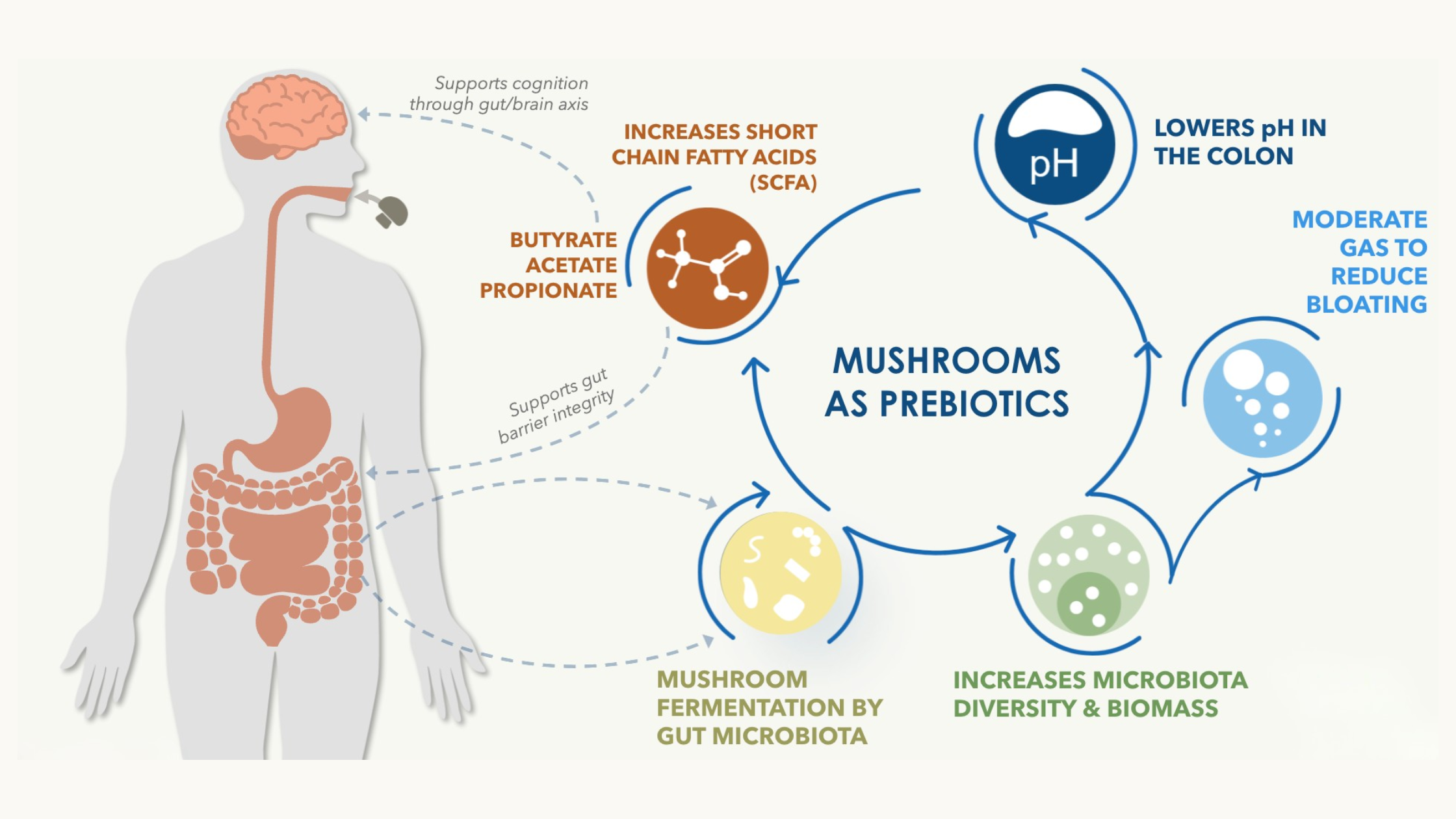
Soluble fiber sources such as psyllium husk, mushrooms, chia seeds, oats, and flaxseeds help soften stool and support regularity, while adequate fiber intake also fuels beneficial gut bacteria that produce short-chain fatty acids like butyrate. Butyrate not only serves as the primary energy source for colon cells and supports intestinal barrier integrity, but also stimulates the body’s natural GLP-1 production and maintains microbiome diversity during periods of reduced dietary variety. Furthermore, when caloric intake drops significantly, meeting protein and micronutrient needs becomes increasingly challenging—inadequate fiber-rich whole foods can compound deficiencies that may increase the risk of lean muscle loss, impaired immunity, and metabolic complications.
Prioritizing fiber intake through whole food sources like vegetables, mushrooms, legumes, berries, and whole grains—and considering fiber supplementation when dietary intake falls short—offers a practical, evidence-based strategy to support digestive comfort, microbiome health, and overall metabolic resilience throughout GLP-1 therapy
High Level Takeaways
- Digestive side effects are common with GLP-1 therapies
- Rapid weight loss may increase metabolic stress and nutrient deficiencies
- Gut microbiome disruptions are becoming an area of growing scientific interest
- Supporting digestive and metabolic resilience may become increasingly important for long term users
- Adequate fiber intake (25–38 grams daily) supports digestive regularity, feeds beneficial gut bacteria that produce butyrate, and helps maintain nutritional adequacy during reduced calorie intake.

Why Functional Mushrooms Are Entering the GLP-1 Conversation
Functional mushrooms are a source of fiber a key nutrient in the GLP-1 context being studied for their effects on metabolic health, microbiome support, immune regulation, and digestion, all areas that intersect with the physiological pathways influenced by GLP-1 drugs.
Research has shown that certain mushroom species may help support blood sugar regulation, insulin sensitivity, and appetite related signaling. For example, oyster mushroom powder has been associated with increases in GLP-1 signaling and reductions in hunger responses in preclinical and early human research.
Mushrooms also contain unique polysaccharides and fibers that function as prebiotics. These compounds help nourish beneficial gut bacteria and support the production of short chain fatty acids such as butyrate, which play important roles in gut barrier integrity, digestive balance, and immune regulation.
Full spectrum mushrooms have also been shown to positively impact the composition of the microbiome and stimulate butyrate production, a key short chain fatty acid to support a healthy gut barrier.
Additional research suggests certain mushroom species may influence DPP 4 activity, the enzyme responsible for breaking down GLP-1 in the body. Preclinical studies on chaga mycelium, for example, have demonstrated DPP 4 inhibitory activity, pointing to another potential complementary mechanism worth further exploration.
Importantly, functional mushrooms are not being positioned as replacements for GLP-1 therapies. Rather, they may represent a complementary nutritional strategy that supports gut health, metabolic function, and overall physiological balance alongside these medications.
High Level Takeaways
- Functional mushrooms are a source of prebiotic fiber, a key nutrient to support digestive health and gastric emptying.
- Functional mushrooms align with several pathways influenced by GLP-1 therapies
- Mushroom polysaccharides may support gut microbiome diversity and postbiotic production
- Certain mushroom species may support blood sugar regulation and appetite signaling
- Functional mushrooms may help support the body alongside GLP-1 therapies, not replace them

Looking Ahead: Supporting the Whole Person
GLP-1 therapies are transforming the future of weight management and metabolic health. As adoption expands, the conversation is evolving beyond weight loss alone and toward how individuals can maintain digestive health, metabolic resilience, nutrient status, and overall wellness during long term use.
While direct clinical research combining GLP-1 therapies and functional mushrooms is still in its early stages, the broader scientific literature surrounding metabolism, microbiome health, and mushroom bioactives provide a compelling rationale for continued exploration.
At M2 Ingredients, we believe the future of wellness will increasingly focus on supporting the whole person through science-backed, systems-based approaches. Functional mushrooms represent one promising area of innovation within that future.
High Level Takeaways
- GLP-1 therapies are reshaping metabolic health and wellness conversations
- Long term support strategies will become increasingly important
- Functional mushrooms are a source of prebiotic fiber and represent a science grounded area for future research and innovation
- Supporting gut health, metabolism, and resilience together may define the next generation of wellness solutions
REFERENCES
Ariaee A, Noueihad K, Hunter A, Wignall A, Wardill HR, Davies M, Prestidge CA, Joyce P. “Gut microbiota perturbation and systemic inflammation are associated with salcaprozate sodium (SNAC)-enabled oral semaglutide delivery”. J Control Release. 2026 Apr 10;392:114711. doi: 10.1016/j.jconrel.2026.114711. Epub 2026 Feb 9. PMID: 41672308.
Aramabašić Jovanović J, Mihailović M, Uskoković A, Grdović N, Dinić S, Vidaković M. “The Effects of Major Mushroom Bioactive Compounds on Mechanisms That Control Blood Glucose Level”. J Fungi (Basel). 2021 Jan 16;7(1):58. doi: 10.3390/jof7010058. PMID: 33467194; PMCID: PMC7830770.
Daoust, J., Schmalz, J., Van Meulebroek, L., Ghyselinck, J., Verstrepen, L., & Marzorati, M. (2025). “Prebiotic activity of functional whole mushroom powders in short-term in vitro colonic simulations”. Journal of Functional Foods, 130, 106912.
Deen, K.R., S. Rithick, M. Muthumari, D. Jayakumar, N.A. Sam et al. 2026. Hepatoprotective Ergostane and Lanostane Derivatives from Mushrooms for the Management of Metabolic Dysfunction-Associated Fatty Liver Disease: A Review. International Journal of Medicinal Mushrooms 28(2):1-16.
Dicks, L., L. Jacobs, M. Sari, R. Hambitzer, N. Ludwig et al. 2022. Fortifying a meal with oyster mushroom powder beneficially affects postprandial glucagon-like peptide-1, non-esterified free fatty acids and hunger sensation in adults with impaired glucose tolerance: a double-blind randomized controlled crossover trial. European Journal of Nutrition 61(2):687-701.
Drucker, D.J. & M.A. Nauck. 2006. The incretin system: glucagon-like peptide-1 receptor agonists and dipeptidyl peptidase-4 inhibitors in type 2 diabetes. Lancet 368(9548):1696-1705.
Drugs and Lactation Database (LactMed®) Internet]. 2006. Bethesda (MD): National Institute of Child Health and Human Development. PMID 30000039.
Dubey SK, Chaturvedi VK, Mishra D, Bajpeyee A, Tiwari A, Singh MP. “Role of edible mushroom as potent therapeutics for the diabetes and obesity”. 3 Biotech. 2019 Dec;9(12):450. doi: 10.1007/s13205-019-1982-3. Epub 2019 Nov 14. PMID: 31832297; PMCID: PMC6856246.
Filippatos TD, Panagiotopoulou TV, Elisaf MS. “Adverse Effects of GLP-1 Receptor Agonists”. Rev Diabet Stud. 2014 Fall-Winter;11(3-4):202-30. doi: 10.1900/RDS.2014.11.202. Epub 2015 Feb 10. PMID: 26177483; PMCID: PMC5397288.
Geng, Y., Z.M. Lu, W. Huang, H.Y. Xu et al. 2013. Bioassay-guided isolation of DPP-4 inhibitory fractions from extracts of submerged cultures of Inonotus obliquus. Molecules 18(1):1150-61.
Huang, H.Y., T. Zhao, J.C. Li, J.Y. Shen, R. Xiao et al. 2023. Gut microbiota regulation of inflammatory cytokines and microRNAs in diabetes-associated cognitive dysfunction. Applied Microbiology and Biotechnology 107(23):7251-67.
Jayachandran M, Xiao J, Xu B. “A Critical Review on Health Promoting Benefits of Edible Mushrooms through Gut Microbiota”. Int J Mol Sci. 2017 Sep 8;18(9):1934. doi: 10.3390/ijms18091934. PMID: 28885559; PMCID: PMC5618583.
Johnen J., Lisa Dicks, Dominik J. Kaczmarek, Nils B. Kroemer, Leonie Weinhold, Sabine Ellinger. “Effects of fortifying a meal with oyster mushroom powder on subsequent ad libitum energy intake, gastric emptying, selected gastrointestinal hormones and appetite sensations in adults with overweight/obesity: A double-blind randomized controlled crossover trial”. Journal of Functional Foods, Volume 129, 2025, 106907, ISSN 1756-4646, https://doi.org/10.1016/j.jff.2025.106907.
Johnson BVB, Milstead M, Kreider R, Jones R. “Dietary supplement considerations during glucagon-like Peptide-1 receptor agonist treatment: A narrative review”. Obes Pillars. 2025 Sep 8;16:100209. doi: 10.1016/j.obpill.2025.100209. PMID: 41368199; PMCID: PMC12685510.
Klümpen, L., A. Donkers, W. Seel, L. Dicks et al. 2025. GLP-1 Responses to a Single Meal Fortified With Oyster Mushroom Powder in Adults with Impaired Glucose Tolerance Depend on the Gut Microbiota Composition Before the Meal. Molecular Nutrition and Food Research 69(20:e70159.
Li, C. & P. Lu. 2023. Association of Gut Microbiota with Age-Related Macular Degeneration and Glaucoma: A Bidirectional Mendelian Randomization Study. Nutrients 15(21): 4646.
Smits MM, Holst JJ. “Endogenous glucagon-like peptide (GLP)-1 as alternative for GLP-1 receptor agonists: Could this work and how?” Diabetes Metab Res Rev. 2023 Nov;39(8):e3699. doi: 10.1002/dmrr.3699. Epub 2023 Jul 24. PMID: 37485788.
Sun Y, Veccia D, Liu BDX, Tse W, Fass R, Song G. “Diagnostic Evaluation of an Increased Risk of Developing Small Intestinal Bacterial Overgrowth Associated with Glucagon-like Peptide-1 (GLP-1) Receptor Agonists and Dual GLP-1/GIP Receptor Agonists: A Global Retrospective Multicenter Cohort Analysis”. Diagnostics (Basel). 2025 Sep 7;15(17):2264. doi: 10.3390/diagnostics15172264. PMID: 40941750; PMCID: PMC12427755.
Yu C, Dong Q, Chen M, Zhao R, Zha L, Zhao Y, Zhang M, Zhang B, Ma A. “The Effect of Mushroom Dietary Fiber on the Gut Microbiota and Related Health Benefits: A Review”. J Fungi (Basel). 2023 Oct 19;9(10):1028. doi: 10.3390/jof9101028. PMID: 37888284; PMCID: PMC10608147.
Zeng Y, Wu Y, Zhang Q, Xiao X. “Crosstalk between glucagon-like peptide 1 and gut microbiota in metabolic diseases”. mBio. 2024 Jan 16;15(1):e0203223. doi: 10.1128/mbio.02032-23. Epub 2023 Dec 6. PMID: 38055342; PMCID: PMC10790698.
Zhao J, Hu Y, Qian C, Hussain M, Liu S, Zhang A, He R, Sun P. “The Interaction between Mushroom Polysaccharides and Gut Microbiota and Their Effect on Human Health: A Review”. Biology (Basel). 2023 Jan 12;12(1):122. doi: 10.3390/biology12010122. PMID: 36671814; PMCID: PMC9856211.