Why the Canine Gut Matters for Performance, Immunity, and Behavior
A balanced gut microbiome underpins digestion, nutrient absorption, mucosal barrier integrity, and immune readiness in dogs. Emerging evidence also links gut ecology to behavior via the gut–brain axis—through microbial metabolites (short-chain fatty acids, SCFAs), neurotransmitter modulation (serotonin, dopamine, GABA), immune signaling, and the HPA (stress) axis. Disturbances (dysbiosis) are associated with gastrointestinal conditions, obesity, and—in a growing body of research—behavioral phenotypes such as anxiety and aggression (reviewed in Kiełbik & Witkowska-Piłaszewicz, 2024).
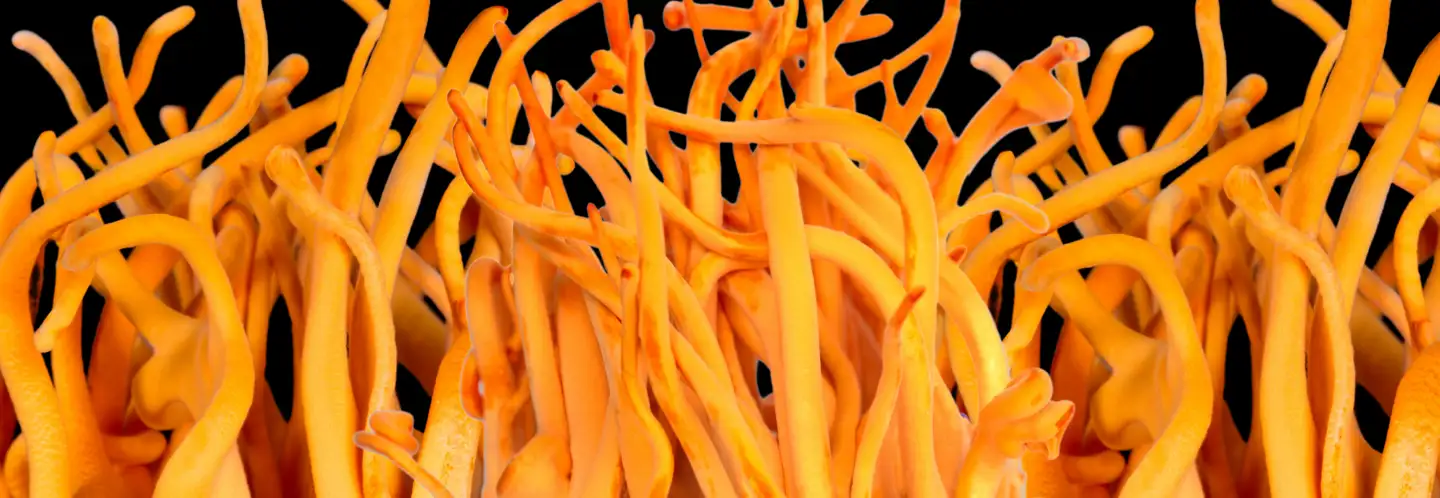
Functional mushrooms contribute a diversity of fermentable fibers (soluble and insoluble), including beta-glucans, chitin, and hemicellulose, that act as prebiotics for beneficial microbes. Additionally, both beta-glucans and chitin (Wegener 2025) function as immunomodulators that directly engage host immunity, inducing trained immunity that contributes to disease resistance mechanisms.
In humans, whole mushroom powders show robust prebiotic activity in validated colonic simulations, increasing SCFAs and improving markers of barrier function and microbial diversity (Daoust et al., 2025). Parallel canine data—both single-species and blended interventions—now indicate meaningful gastrointestinal and immune benefits for dogs, with intriguing implications for behavior through the gut–brain axis.
What Recent Canine Studies Show
Lion’s Mane (Hericium erinaceus): In aged dogs, dietary Lion’s Mane shifted gut microbial structure toward a more balanced community, with signals consistent with improved immunity, modulation of inflammation, and anti-obesity effects supportive of body-weight control (Cho et al., 2022).
β-1,3/1,6-glucans (yeast/mushroom-sourced): Titrated β-glucans in a dry extruded diet improved apparent digestibility, immune variables, and the fecal abundance of beneficial probiotic taxa in healthy adult dogs (Marchi et al., 2024).
Shiitake-inclusive nutraceutical blend: A 4-week regimen produced favorable microbiome shifts in healthy dogs (Atuahene et al., 2024).
Reishi (Ganoderma lucidum): Top-dressing a complete dry diet with Reishi exerted immunostimulatory effects in healthy dogs (Kayser et al., 2024).
Concordance with human-relevant in vitro models: In short-term colonic simulations seeded with human fecal microbiota, single-species and multi-species mushroom powders increased SCFAs and improved markers linked to gut and immune function (Daoust et al., 2025). These mechanisms—fiber fermentation to acetate/propionate/butyrate and β-glucan–pattern recognition receptor signaling—are conserved and highly relevant to canines.
Takeaway for GI outcomes pet owners can notice: More regular stools, reduced gas and bloating, better stool consistency, improved coat and skin via nutrient uptake, immune resilience, and support for healthy weight regulation (blog synthesis of canine trials above).
The Gut–Brain Axis Link: Why GI Formulations Can Influence Behavior
The 2024 Animals review synthesizes canine and cross-species evidence that the microbiome communicates with the CNS via:
- Neurotransmitters: Microbes influence peripheral serotonin (most is produced in the gut), GABA, and dopamine pathways that shape mood, arousal, and stress responsivity. Altered serotonin has been reported in aggressive dogs; diet and microbiome modulation can influence these systems (Kiełbik & Witkowska-Piłaszewicz, 2024).
- SCFAs: Butyrate and other SCFAs fuel colonocytes, maintain barrier integrity, regulate microglia, and may modulate HPA-axis tone. Low SCFAs are linked to dysbiosis and stress-sensitive states.
- Immune signaling: Dysbiosis elevates pro-inflammatory cytokines (e.g., IL-6, TNF-α), which can cross the blood–brain barrier and activate stress pathways. Microbiome-targeted strategies have been shown to reduce such signals across multiple models.
- HPA axis: Stress alters microbiota composition; dysbiosis can, in turn, amplify HPA activation—creating a feedback loop that affects behavior.
Implication: Building canine diets and toppers with prebiotic mushroom fibers and β-glucans offers a credible route to support not only digestive and immune health but also behavioral well-being through microbiome-mediated mechanisms. While direct clinical trials on behavior with mushroom ingredients in dogs are still needed, the mechanistic bridge is strong and consistent with early canine microbiome–behavior findings (Kiełbik & Witkowska-Piłaszewicz, 2024).
Formulation Guidance: Translating the Science into Products
1) Choose full-spectrum, research-backed species
- Lion’s Mane: Microbiome regulation; human-relevant prebiotic activity; exploratory anti-obesity signaling (Cho 2022; Daoust 2025).
- Reishi: Immunostimulatory effects when top-dressed (Kayser 2024).
- Shiitake (in blends): Microbiome shift potential (Atuahene 2024).
- β-glucan concentrates/extracts: Immune and digestibility benefits; probiotic compositional shifts (Marchi 2024).
2) Prioritize the prebiotic fraction
Aim for whole-mushroom powders (fruiting body + mycelium) that contain a diversity of both soluble and insoluble dietary fibers. These deliver fermentable polysaccharides (β-glucans, chitin, hemicelluloses) that raise SCFAs and diversify the microbiota (Daoust 2025). Avoid over-purified isolates that strip fiber co-factors.
3) Target gut barrier and immune tone
β-glucans engaging Dectin-1/TLR pathways can “prime, not push” immunity—ideal for daily nutrition. Pair with polyphenol-rich co-ingredients (e.g., functional berries) if desired, and avoid unnecessary emulsifiers that may perturb the mucosa.
4) Form factor and processing
Dry extruded kibbles and cold-formed toppers or chews can both work; maintain gentle thermal profiles to preserve β-glucan conformation and fiber functionality.
For toppers, palatability is crucial; umami-rich mushrooms often help. Use top-dress scoops or measured sachets to simplify owner compliance (as in Kayser 2024).
5) Microbiome endpoints for claims-ready R&D
In pilot studies, track stool form and frequency, fecal SCFAs, 16S diversity metrics, IgA or innate markers, and optional cortisol (HPA readout). For behavior-adjacent exploration, include validated CBARQ subscales or activity monitors (per Animals review).
6) Responsible claims language (pet)
Use compliant, evidence-based phrasing such as:
- “Supports digestive health.”
- “Prebiotic fibers to nourish beneficial gut microbiota.”
- “Helps maintain healthy immune function.”
- “Provides β-glucans known to interact with innate immune cells.”
For behavior, use indirect, physiology-anchored phrasing:
- “Supports a healthy gut–brain axis through prebiotic fiber and SCFA production.”
Avoid disease or drug-like claims.
7) Quality and safety
Source indoor-grown, contaminant-controlled mushrooms. Verify species identity and β-glucan content (single-helix conformation tests preferred). Ensure mycotoxin, heavy metal, and pathogen compliance suitable for companion animals.
Practical Product Concepts
Daily Gut & Immune Topper (All Life Stages): Full-spectrum Lion’s Mane + Reishi whole-mushroom powder delivering a fermentable fiber matrix and β-glucans. Palatability enhanced with natural umami and broth flavors.
Senior Vitality Kibble Enhancer: Emphasize Lion’s Mane for microbiome regulation in aging; add MOS/FOS for a symbiotic effect; track SCFAs and stool quality in a 4–8 week home-use test.
Sensitive-Stomach Chew: Blend with a Shiitake-inclusive complex and gentle fibers; position around stool consistency and digestive comfort.
What This Means for Formulators
Functional mushrooms offer a dual-pathway value proposition: prebiotic (microbiome/SCFAs/barrier) and immunonutrition (β-glucans).
The canine evidence base now includes controlled studies showing improved digestibility, probiotic composition shifts, and immune modulation—mirroring human-relevant prebiotic findings.
Given the gut–brain axis connection, microbiome-forward GI products may have downstream behavioral benefits—a compelling frontier for differentiated yet responsible claims.
Investment in measured SCFA outcomes and microbiome profiling can convert these mechanisms into brand-owned data and supportive dossiers.
References (Selected)
Atuahene, D. et al. Animals 2024;14(8):1189.
Cho, H.W. et al. J Anim Sci Technol 2022;64(5):937–949.
Daoust, J. et al. J Functional Foods 2025;130:106912.
Kayser, E. et al. J Anim Sci 2024;102:skae051.
Marchi, P.H. et al. Microorganisms 2024;12(1):113.
Kiełbik, P.; Witkowska-Piłaszewicz, O. “The Relationship between Canine Behavioral Disorders and Gut Microbiome and Future Therapeutic Perspectives.” Animals 2024;14(14):2048.
Wagener, J., Wang, X., Becker, K.L., Aimanianda, V., Valsecchi, I., Gresnigt, M.S., Netea, M.G., Latgé, J.P., Gow, N.A.R., van de Veerdonk, F.L. Cell Surf. 2025;14:100146. doi:10.1016/j.tcsw.2025.100146.