At M2 Ingredients, sustainability is not a static claim or a single certification. It is an ongoing, systems-based commitment to improving how functional mushrooms are grown, processed, and delivered, while prioritizing environmental stewardship, social fairness, scientific integrity, and long-term resilience.
M2 Ingredients’ sustainability practices are aligned with internationally recognized frameworks, including the United Nations Sustainable Development Goals (UN SDGs), the B Lab B Impact Assessment, and the Regenerative Organic Certification® (ROC) standard. This alignment is based on publicly available methodologies and guidance from the United Nations, B Lab, the Regenerative Organic Alliance, the FAO, the ILO, and related authorities.
Together, these frameworks provide a shared global language for responsible production, labor practices, and continuous improvement. They also serve as benchmarks against which M2 Ingredients regularly evaluates, measures, and advances its sustainability performance.
ENVIRONMENTAL STEWARDSHIP THROUGH INDOOR CULTIVATION
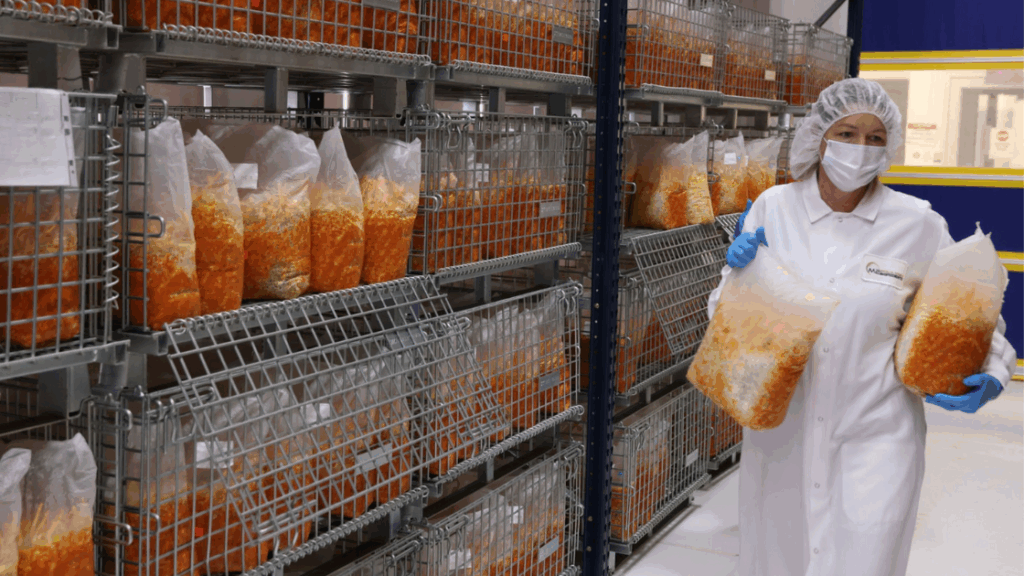
M2 Ingredients produces functional mushrooms in fully controlled, indoor cultivation environments specifically designed to maximize output while minimizing land use, waste, and resource intensity.
High-ceiling growing rooms with vertical stacking enable a high volume of mushrooms to be produced within a relatively small physical footprint, directly supporting efficient infrastructure use and responsible production. Sequential planting, harvesting, and processing reduce the risk of crop failure and material waste that are more common in outdoor or less-controlled agricultural systems.
Upgrades implemented in M2’s newest production facility have significantly increased output per unit of water, electricity, gas, and labor. The new facility allowed us to reduce our per pound water usage by 40%! These improvements reflect continuous gains in operational efficiency without compromising product quality.
Processing operations are intentionally distributed across early morning, evening, and nighttime shifts to reduce strain on the electrical grid during peak demand periods. M2’s fully vertically integrated system—from master culture preservation through cultivation, harvesting, dehydration, milling, packaging, warehousing, and shipping—eliminates unnecessary transportation between third-party facilities, reducing associated emissions.
Material handling has been further optimized through conveyors and pneumatic systems, removing the need for interim packaging materials previously required between processing steps.
UN SDG Mapping
- SDG 9 – Industry, Innovation, and Infrastructure: Purpose-built indoor cultivation and processing systems
- SDG 12 – Responsible Consumption and Production: Reduced waste and optimized resource use
- SDG 13 – Climate Action: Lower emissions through efficiency and reduced transportation
- SDG 7 – Affordable and Clean Energy: Reduced peak-hour grid demand through shift scheduling
B Corp Framework Mapping
- Environment Impact Area: Energy efficiency, waste reduction, and operational optimization
INDOOR CULTIVATION AS A SUSTAINABILITY AND QUALITY ADVANTAGE
Indoor mushroom cultivation offers both environmental and product-quality advantages that are particularly important for fungi.
Mushrooms are natural bioaccumulators, meaning they absorb compounds present in their growing environment. By cultivating mushrooms indoors under fully controlled conditions, M2 Ingredients minimizes exposure to environmental contaminants such as heavy metals, pesticide drift, and airborne pollutants that may be present in outdoor or uncontrolled agricultural systems.
Controlled indoor environments allow for precise management of temperature, humidity, air quality, substrate composition, and sanitation. This level of control reduces variability, maximizes yield efficiency, and significantly lowers the risk of contamination or batch loss. Reduced crop loss directly translates to lower material waste and more efficient use of land, water, and energy resources.
From a quality and science perspective, stable cultivation conditions also support consistent expression of mushroom bioactives. Environmental consistency allows mushrooms to develop predictable functional and nutritional profiles, which is essential for reproducible research outcomes, validated testing, and formulation reliability in finished products.
Importantly, indoor cultivation supports both sustainability and integrity across the supply chain. By reducing contamination risk and environmental variability, M2 Ingredients is able to produce higher-quality functional mushrooms with consistent, science-backed bioactives while simultaneously minimizing waste and unnecessary resource use.
Framework Alignment Statement
Collectively, these practices support responsible production, product safety, and scientific reproducibility, aligning with the intent of the United Nations Sustainable Development Goals related to responsible consumption and production, innovation, climate action, and health; the Environment and Customers impact areas of the B Corp Impact Assessment; and the Regenerative Organic Certification® pillars of Soil Health and Social Fairness through reduced waste, controlled inputs, and system-level integrity.
REGENERATIVE ORGANIC SUBSTRATE SOURCING
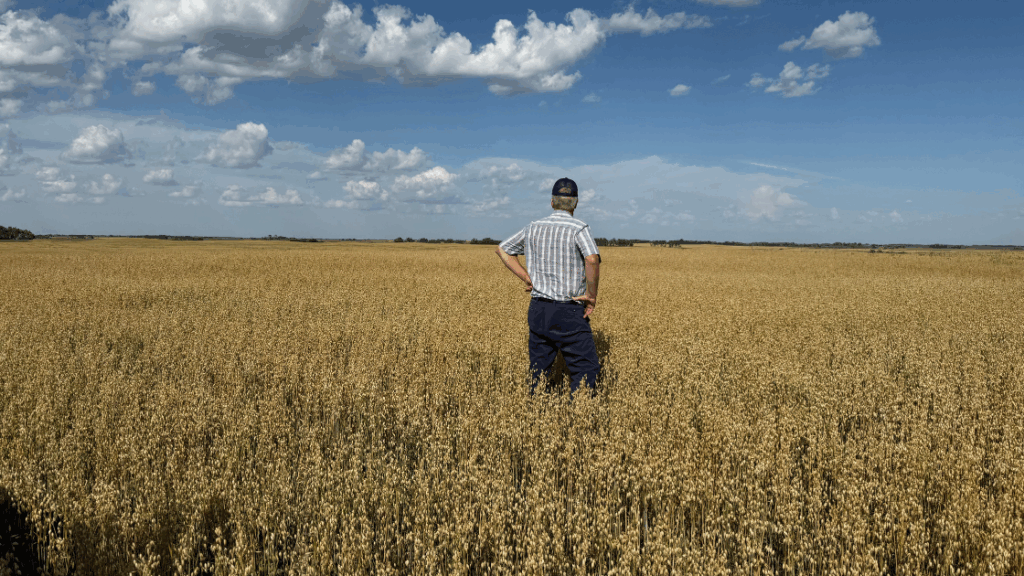
Functional mushroom cultivation requires an edible substrate, and M2 Ingredients has intentionally selected Regenerative Organic Certified® oats as a foundational input for a new line of ROC certified products.
These oats are dryland farmed using natural rainfall rather than pumped irrigation, reducing water demand relative to water-intensive crops such as rice. Farms supplying M2 operate under regenerative organic systems that incorporate crop rotation, cover cropping, composting, reduced tillage, and soil-building practices designed to enhance long-term soil health, carbon sequestration, and biodiversity.
Using whole oats eliminates the need for energy-intensive pre-processing prior to arrival at the M2 facility and prevents the creation of additional waste streams associated with refined agricultural inputs.
UN SDG Mapping
- SDG 6 – Clean Water and Sanitation: Reduced irrigation demand
- SDG 12 – Responsible Consumption and Production: Efficient, low-waste input sourcing
- SDG 13 – Climate Action: Lower emissions intensity through regenerative practices
- SDG 15 – Life on Land: Improved soil health and biodiversity
B Corp Framework Mapping
- Environment Impact Area: Responsible sourcing and ecosystem stewardship
LOW-IMPACT PROCESSING AND FULL-SPECTRUM INTEGRITY
M2 Ingredients produces primarily unextracted, full-spectrum functional mushroom powders using minimal processing designed to preserve nutritional integrity while reducing energy and material inputs.
At maturity, mushroom biomass, including both fruiting bodies and mycelium, is dehydrated and milled entirely in-house using custom-designed, highly efficient equipment. Powders are processed to very low water activity levels, enabling long shelf life at ambient temperatures without the need for refrigeration.
M2 utilizes steam generated from a high-efficiency boiler for substrate sterilization, steaming, and dehydration, reducing reliance on electricity-intensive processes.
Unextracted powders retain the full natural matrix of mushroom bioactives, including prebiotic dietary fibers and other compounds that are often reduced or removed during extraction. Preserving these components supports nutritional integrity and addresses widespread dietary fiber insufficiency while simultaneously advancing M2’s sustainability goals through reduced processing intensity.
UN SDG Mapping
- SDG 12 – Responsible Consumption and Production: Minimal processing and reduced resource inputs
- SDG 9 – Industry, Innovation, and Infrastructure: Purpose-built, efficient processing systems
- SDG 3 – Good Health and Well-Being: Nutritional support through whole-food integrity
B Corp Framework Mapping
- Environment Impact Area: Energy efficiency and material reduction
- Customers Impact Area: Transparent ingredient integrity and product quality
SOCIAL FAIRNESS AND LABOR PRACTICES
M2 Ingredients is committed to safe, fair, and equitable working conditions across all levels of the organization, from production and warehouse teams to scientists, operations staff, and executive leadership.
M2 operates as a fully integrated organization where all employees contribute to shared goals and are valued as part of a unified team. Production staff, warehouse teams, scientists, quality professionals, and leadership work collaboratively, celebrate company milestones together, and participate in a shared culture built on respect, transparency, and mutual accountability.
Employees throughout the organization have access to a high standard of benefits. These include comprehensive health insurance, 401(k) retirement plans with employer contributions, paid vacation and sick leave, and competitive; living wages designed to support a sustainable standard of living and aligned with market conditions. Time-off policies, benefits of access, and workplace protections are applied equitably across the organization.
Facilities are designed with employee health and safety as a priority and are supported by a full-time Environmental Health and Safety Manager, ongoing training programs, and continuous safety monitoring. Mandatory harassment prevention training, equal-pay policies, and transparent disciplinary procedures help ensure a respectful and inclusive work environment.
Clear pathways for career advancement, structured feedback channels, and internal mobility opportunities support long-term employee development and retention.
UN SDG Mapping
- SDG 8 – Decent Work and Economic Growth: Fair wages, benefits, and safe working conditions
- SDG 5 – Gender Equality: Equitable policies and inclusive workplace practices
- SDG 10 – Reduced Inequalities: Equal access to benefits and advancement opportunities
B Corp Framework Mapping
- Workers Impact Area: Employee well-being, safety, and engagement
- Community Impact Area: Inclusive employment and economic contribution
REGENERATIVE ORGANIC CERTIFICATION® LEADERSHIP
M2 Ingredients is Regenerative Organic Certified®, meeting rigorous standards across the ROC pillars of Soil Health and Social Fairness. While animal welfare criteria are not applicable to fungal systems, M2 fully satisfies all relevant requirements of the certification.
Beyond certification, M2 Ingredients actively contributed technical expertise during the development and approval of Regenerative Organic Alliance mushroom standards, helping ensure that fungi are accurately represented within regenerative agriculture frameworks.
CONTINUOUS IMPROVEMENT
M2 Ingredients views sustainability as a continuous process rather than a fixed endpoint. Ongoing priorities include further efficiency gains in energy and water use, expansion of regenerative supply partnerships, continued investment in employee development and safety systems, and transparent alignment with globally recognized sustainability frameworks.
Through vertically integrated indoor cultivation, regenerative organic sourcing, low-impact processing, and equitable labor practices, M2 Ingredients demonstrates that functional mushroom production can be both scientifically rigorous and environmentally responsible.
Alignment with the United Nations Sustainable Development Goals, the B Corp Impact Assessment, and Regenerative Organic Certification® reflects M2’s commitment to transparency, continuous improvement, and leadership within the functional ingredient industry.